28
Diss-ciples.
Forget you ever saw Da Vinci’s Last Supper. It’s a beautiful work, yes. I’m told you can even replace the pieces of bread dotting the table with musical notes and get a pretty great funeral dirge. But take it out of your mind. Because you may have an image in your head where all these men were basically the same. Variations on a theme, different robe and beard thicknesses, but essentially copies of each other. The Apostles.
Rather than thinking of only Judas as the one dissident – and of course he was the most potent one – try and see these men for who they were. How they thought.
Peter, Andrew, James and John. Fisherman who had lately felt forced to fish all day and all night in the overfished Sea of Galilee. “Damn those Romans” they said to their empty nets for the seeming insatiability for fish the Empire had, even as this Empire showed little regard for the hands that netted them.
Thomas wasn’t so much a doubter as he was a cynic. Messiahs come and go, was Thomas’s skeptical take. Tales of miracles and bold teaching were as common as the bone boxes they ended up in. “Might is right, and no one has might like Caesar. Get used to it,” Thomas said to anyone who wondered about God’s Kingdom ever being realized.
Simon the Zealot had some inflammatory views about all this. “You gotta fight fire with fire!” he’d say. The Zealots often carried little daggers in their robes, waiting for an opportune time to assassinate a government leader in the market or during a parade, in hopes to foment the unrest needed for a bottom-up revolution to begin. Overpower the powers that be. Would God call God’s warriors to any less?
Imagine the table, these men sitting there complaining, counter-complaining, pointing out the appreciable fact that complaining accomplishes nothing but ulcers.
Imagine now Matthew sitting between them quietly. Remember, Matthew’s job prior to his joining Team Jesus was tax collection. In a world where the temple, its compulsory offerings and numerous fees for being, coupled with Roman taxes, amounted to well over half your income. Imagine how Jewish men felt about a Jewish man who excised tax on, say, fish. Ancestral land. All for the Empire. Imagine how Matthew felt when Simon Z. got his knife out and sharpened it. How he felt when the fishermen cursed his employer, and maybe in hushed tones cursed Matthew himself for selling out. Imagine where all this would go with the Uniting One, Love and Compassion and Forgiveness Incarnate, sitting there doling out bread and acceptance.
Jesus put beatdown blue-collars, a mulcting government lapdog, and a volatile conspiracy theorist at the same table. Like a three-year, irresponsibly inflammatory arbitration meeting. And before his own crucifixion said,
“A new commandment I give to you, that you love one another; as I have loved you, that you also love one another. By this all will know that you are My disciples, if you have love for one another.”
Why command his guys to Love each other unless their marked differences of opinion were to remain? Don’t we sort of automatically Love those who align with our path, whose voice harmonizes with our own? Didn’t Jesus imply strongly by making love a commandment that it was something they would need commanded to do. You know, in the event that they forgot there is a higher Love than that which is only given to people exactly like yourself.
And of all things we people of faith could be known as “disciples” for, and of all the things we are known for, is there anything more dignifying of our uniqueness than to be told we have to Love each other, despite our differences?
We weren’t commanded to make people change. Really, we could have been given the command and the magic power to back it up to transform people into something better.
We weren’t commanded to partition ourselves off from people when we can’t change them. A turn or burned bridges motif.
Neither were we commanded to perpetuate tribalism as all religion eventually boils down to. Our god and our guns against your god and your guns, for example. Make them like you, or make them pay. No. Instead the scriptures say that someday every tribe, every nation, finally one day gets it. But it never says, “They finally become one tribe.” Every tribe. Every language. Every nation, the dignity of difference united in their taking a knee for the uniting One. No two people will see the One they bow before the same way. Apparently he was ok with this.
Jesus looked at people who would argue on a good day and who would attempt murder on a bad day and said, learn to Love the others at this table. To honor and respect and dignify. As a wonderful joke on us all, he never told them which one of them was right. Because what’s right is Love. The command to Love is something of a warning: it won’t come naturally. At least not at first. We will have to choose to suffer the gap between our ideas, our views, and find a deeper oneness than that which we make out of similarity or agreement. Maybe someday it will become habit. Until then, it’s a command.
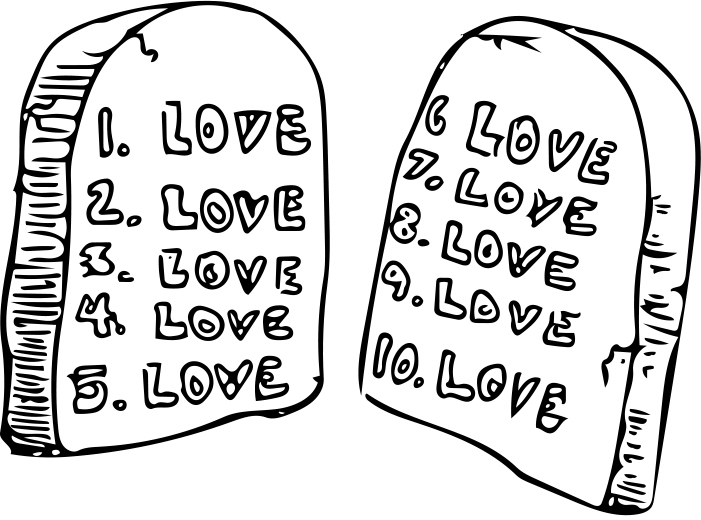
Is there anything more remarkable than wholly disparate objects being held in the gravitation pull of Love? Frankly, is there anything remarkable at all about a clique where that gravity isn’t required?
This I call forgiving the sin of dissimilarity. To be honest, it’s easier for me to forgive you for punching me in the eye.
According to how Jesus socialized and got his work done, this kind of forgiveness can be given to anyone, from anyone. Even to someone as unforgiving as me.