26
Forgiving You for Being You Allows You to Be the Real You.
None of us love a two-faced person. A manipulator. A conniver. A dissembler.
But who else is there to love?
If we’re going to love, these are exactly who we’ll be loving. Because our lack of forgiveness – demands that others be and do something else before we’ll be at peace with them – is generally the reason for the duplicity we hate in the first place.
“To be fully seen by somebody, then, and be loved anyhow – this is a human offering that can border on miraculous.”
The television series “V” was a huge hit my third grade year. But I wasn’t.
I didn’t understand the social requirements for becoming one. So I did what any socially inept, eight-year old sci-fi enthusiast would do to try and garner friends and belong. I drew scales on my arm with a sharpie and covered it with peach construction paper and tape. When kids came by who I hoped to would eventually deem me worthy of a birthday party invitation or a kind word, I’d rip the paper off and hiss at them. Astoundingly, no kindness was awarded these special effects. Earthlings.
In fourth grade I experienced my problem more acutely. I was rich in imagination but destitute on social know-how. Blessed are there poor? Hmph. Drawing aliens with my colored-pencil set was easy. Drawing a crowd that didn’t want to harm me for the sport of it, hard. I needed to adjust their attention toward me to positive, to compensate for my odd looks and odder interests. Einstein observed problems aren’t solved by the level of consciousness that create them. Which is probably why my solution made so much sense to me and garnered so little positive results.
I began telling kids my real name wasn’t Steve. It was Rex. Rex of course is Latin for King and was also my favorite Dinosaur’s surname. I was Rex Daugherty. This had all the relational magnetism of paper skin and a flitting tongue. It turns out dinosaur kings have less appeal to the upper echelons of fourth grade hierarchy, not more. Back to the drawing board.
In fifth grade I had a burgeoning reputation as an artist. The weird kid with the oversized cranium can draw, something like that. I vividly remember the day I sketched a scene from Star Wars and, before I could rationally process the decision, found myself sliding it across the table to Michael. Michael was a popular kid that would often talk to me. But he would also, without warning or provocation, lead attacks against me. This left me in an ambiguous anxiety over whether he was an enemy or not. For a desperate fifth grader, this ambiguity may have been more psychologically dangerous than consistent hostility.
Michael took the drawing and carefully placed it in his folder like a precious ancient manuscript. I was stunned. Stunned I’d shared it, and stunned he’d received it with such care.
At the end of the day our class would line up for final bell. Scholarly types by the door, cool kids in the middle, leprous losers in the back huddled by the coat rack. As I made my way to the tail of this social creature, Michael stopped me.
“You wanna cut?” he said.
Assuming he was either talking to his roundtip scissors or was joking at my expense, I didn’t respond. When he repeated himself, it was suddenly clear I was experiencing what I believe may have been the first invitation of my life. Then Aaron, a head taller than Michael, whose hostility was graciously consistent, spoke up with disgust on his breath. Aaron had a mustache and was rumored to have already fathered a child.
“You’re letting him cut?” Aaron said to Michael.
I looked at Michael to see what he would say. It never occurred to me that I had every right to cut in line if so invited. I waited to hear Michael defend himself, not me. Hey I was just as surprised as Aaron.
“Yeah,” Michael said. He reached into his folder and pulled out my drawing. “He drew me this.”
Aaron rolled his eyes and backed off. At least the spot in line had been purchased. Otherwise he’d have to object. His clique couldn’t bear suddenly becoming charitable toward kids with the lingering reputation for being lizards with paper skin.
I shuffled in to the middle of the line where jeans fit correctly, kids choose their own haircuts and Stacy’s up-close beauty could be confirmed in the absence of the caste buffer. As I stepped out of the margins and into the median, waves of revelation swept over me: I had converted their opinions. By George (Lucas) I’d finally figured it out. How to compensate for all the insufferable, unpardonable facets of what made Rex, Rex. I finally knew how to make up for all I’d learned was unforgivable about me.
You and I have our thing. I have the impulse to offer what can only be considered an entertaining product, buying my way into your acceptance since, as was solidified decades ago, I don’t have what it takes apart from this. Maybe you use charm, intellect, tight skirts, cash, humor, soup kitchens, compliments, undaunted effervescence, witty cynicism. I’m using the word “use” here. These things aren’t bad. They’re just often not as natural as they seem, being instead an act we were driven to by the unforgiveness of others also trying to find a way to get by.

Being “saved” has so much more to do with right now than our postmortem arrangements. And we humans of every religious description need saved. Saved as having so much to do with accepting Acceptance, shown to us in an unoffended Christ. Being gracious enough to allow others to be whatever they are – or more to the point – to allow others to not be what they aren’t, just as has been done for us who follow this Christ and have found our selves transformed by the invitation.
Allow them to be annoying. Wrong. Unattractive. Misguided. Angry. Not funny. Untraditional. Not of our tribe. Naive. This is the work of Compassionate Forgiveness. The Spirit of Grace liberating us, rescuing us, delivering us from the sense of safety our performance seems to grant us, so that we can be one and known. Not many and alone.
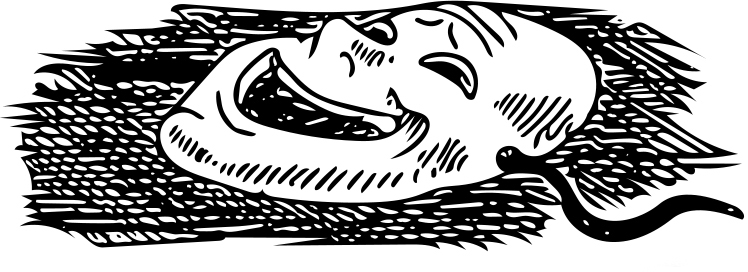
But we can’t step into any of this so long as we believe our preferences, our take on morality, our truths, our insistence that what we want from others is what we’re entitled to, have to be satisfied. We will not only not get what we demand – which is its own misery – but we will continue to motivate people to be the pretending, performing actors we find it so hard to love anyway – a second layer of misery.
Maybe Forgiveness takes the world largely as it is, and then enjoys the change that unfolds as a result of its acceptance. This doesn’t mean I don’t share my faith or my reasons for thinking and believing as I do, or get involved if someone needs help or is hurting themselves. This is not anything like apathy. On the contrary, I eagerly try to invite people to accept Acceptance and Love, and the forgiveness provided us by the Christ for all the ways we’ve tried to be other than what we are. That’s the only way anyone ever gets any better.
Forgive me for having my own way about things.
I forgive you for having your own way about things.
I’m trying hard to not require a performance in exchange for my kindness and inclusion.
Please don’t make me do anything for yours.
“A friend is someone who gives you total freedom to be yourself-and especially to feel, or not feel. Whatever you happen to be feeling at any moment is fine with them. That’s what real love amounts to – letting a person be what he really is.”