Forgiving You for Being You Allows You to Be the Real You.
None of us love a two-faced person. A manipulator. A conniver. A dissembler.
But who else is there to love?
If we’re going to love, these are exactly who we’ll be loving. Because our lack of forgiveness – demands that others be and do something else before we’ll be at peace with them – is generally the reason for the duplicity we hate in the first place.
“To be fully seen by somebody, then, and be loved anyhow – this is a human offering that can border on miraculous.”
The television series “V” was a huge hit my third grade year. But I wasn’t.
I didn’t understand the social requirements for becoming one. So I did what any socially inept, eight-year old sci-fi enthusiast would do to try and garner friends and belong. I drew scales on my arm with a sharpie and covered it with peach construction paper and tape. When kids came by who I hoped to would eventually deem me worthy of a birthday party invitation or a kind word, I’d rip the paper off and hiss at them. Astoundingly, no kindness was awarded these special effects. Earthlings.
In fourth grade I experienced my problem more acutely. I was rich in imagination but destitute on social know-how. Blessed are there poor? Hmph. Drawing aliens with my colored-pencil set was easy. Drawing a crowd that didn’t want to harm me for the sport of it, hard. I needed to adjust their attention toward me to positive, to compensate for my odd looks and odder interests. Einstein observed problems aren’t solved by the level of consciousness that create them. Which is probably why my solution made so much sense to me and garnered so little positive results.
I began telling kids my real name wasn’t Steve. It was Rex. Rex of course is Latin for King and was also my favorite Dinosaur’s surname. I was Rex Daugherty. This had all the relational magnetism of paper skin and a flitting tongue. It turns out dinosaur kings have less appeal to the upper echelons of fourth grade hierarchy, not more. Back to the drawing board.
In fifth grade I had a burgeoning reputation as an artist. The weird kid with the oversized cranium can draw, something like that. I vividly remember the day I sketched a scene from Star Wars and, before I could rationally process the decision, found myself sliding it across the table to Michael. Michael was a popular kid that would often talk to me. But he would also, without warning or provocation, lead attacks against me. This left me in an ambiguous anxiety over whether he was an enemy or not. For a desperate fifth grader, this ambiguity may have been more psychologically dangerous than consistent hostility.
Michael took the drawing and carefully placed it in his folder like a precious ancient manuscript. I was stunned. Stunned I’d shared it, and stunned he’d received it with such care.
At the end of the day our class would line up for final bell. Scholarly types by the door, cool kids in the middle, leprous losers in the back huddled by the coat rack. As I made my way to the tail of this social creature, Michael stopped me.
“You wanna cut?” he said.
Assuming he was either talking to his roundtip scissors or was joking at my expense, I didn’t respond. When he repeated himself, it was suddenly clear I was experiencing what I believe may have been the first invitation of my life. Then Aaron, a head taller than Michael, whose hostility was graciously consistent, spoke up with disgust on his breath. Aaron had a mustache and was rumored to have already fathered a child.
“You’re letting him cut?” Aaron said to Michael.
I looked at Michael to see what he would say. It never occurred to me that I had every right to cut in line if so invited. I waited to hear Michael defend himself, not me. Hey I was just as surprised as Aaron.
“Yeah,” Michael said. He reached into his folder and pulled out my drawing. “He drew me this.”
Aaron rolled his eyes and backed off. At least the spot in line had been purchased. Otherwise he’d have to object. His clique couldn’t bear suddenly becoming charitable toward kids with the lingering reputation for being lizards with paper skin.
I shuffled in to the middle of the line where jeans fit correctly, kids choose their own haircuts and Stacy’s up-close beauty could be confirmed in the absence of the caste buffer. As I stepped out of the margins and into the median, waves of revelation swept over me: I had converted their opinions. By George (Lucas) I’d finally figured it out. How to compensate for all the insufferable, unpardonable facets of what made Rex, Rex. I finally knew how to make up for all I’d learned was unforgivable about me.
You and I have our thing. I have the impulse to offer what can only be considered an entertaining product, buying my way into your acceptance since, as was solidified decades ago, I don’t have what it takes apart from this. Maybe you use charm, intellect, tight skirts, cash, humor, soup kitchens, compliments, undaunted effervescence, witty cynicism. I’m using the word “use” here. These things aren’t bad. They’re just often not as natural as they seem, being instead an act we were driven to by the unforgiveness of others also trying to find a way to get by.
Being “saved” has so much more to do with right now than our postmortem arrangements. And we humans of every religious description need saved. Saved as having so much to do with accepting Acceptance, shown to us in an unoffended Christ. Being gracious enough to allow others to be whatever they are – or more to the point – to allow others to not be what they aren’t, just as has been done for us who follow this Christ and have found our selves transformed by the invitation.
Allow them to be annoying. Wrong. Unattractive. Misguided. Angry. Not funny. Untraditional. Not of our tribe. Naive. This is the work of Compassionate Forgiveness. The Spirit of Grace liberating us, rescuing us, delivering us from the sense of safety our performance seems to grant us, so that we can be one and known. Not many and alone.
But we can’t step into any of this so long as we believe our preferences, our take on morality, our truths, our insistence that what we want from others is what we’re entitled to, have to be satisfied. We will not only not get what we demand – which is its own misery – but we will continue to motivate people to be the pretending, performing actors we find it so hard to love anyway – a second layer of misery.
Maybe Forgiveness takes the world largely as it is, and then enjoys the change that unfolds as a result of its acceptance. This doesn’t mean I don’t share my faith or my reasons for thinking and believing as I do, or get involved if someone needs help or is hurting themselves. This is not anything like apathy. On the contrary, I eagerly try to invite people to accept Acceptance and Love, and the forgiveness provided us by the Christ for all the ways we’ve tried to be other than what we are. That’s the only way anyone ever gets any better.
Forgive me for having my own way about things.
I forgive you for having your own way about things.
I’m trying hard to not require a performance in exchange for my kindness and inclusion.
Please don’t make me do anything for yours.
“A friend is someone who gives you total freedom to be yourself-and especially to feel, or not feel. Whatever you happen to be feeling at any moment is fine with them. That’s what real love amounts to – letting a person be what he really is.”
25
Billy Joel Sang it Best.
My buddy Brian and I agreed to help our mutual friend Patrick build his barn for a couple days. It is to date the most Amish week of my life.
There we were, thirty feet in the air, straddling still-naked trusses of two-by-fours as we banged away at the frame. My main concern was not falling to my death. The other two seemed to be more attuned to the work at hand. But Patrick soon proved less focused on driving in nails as he was with something else.
As we joked and told stories, Patrick kept looking over at Brian and shaking his head, agitated. After half an hour he was out with it.
“Brian. Your belt is on crooked. The nail pouch should be on the front.”
Brian looked down and made an unconcerned sound. Patrick waited a couple minutes and tried again.
“If you have it where it goes, you can pull nails out more easily. More safely. See?” he said, demonstrating with his own.
Brian assured him. “Got it. This is fine though.”
Another two or three minutes of hammers banging filled the quiet.
“Brian, dude, spin it around right,” Patrick said.
Brian gave me a glance. Why was Patrick concerning himself with the placement of the nail pouch on someone else who was fine with where it was?
Bang, bang, bang.
Bang, bang, bang, bang.
Bang, bang, bang, bang, bang.
“Brian! Just. Ugh! Here!” Patrick was now sprawling across the beams and twisting the belt around Brian’s waste into its proper place, speaking through his teeth as he did. Brian held his hammer, bracing himself on the trusses as he was jostled, staring at Patrick, then staring at me. “There! It goes like that!”
We didn’t return the next day. Later I saw the barn and assumed it was exactly how Patrick wanted it.
The Gospels are missing most of the content many of us have been led to think is there. All the content that has Jesus speaking to people about how they need to be different than they are, based on the absolute of Divine preference for every life, got erased or something.
Who does Jesus level criticisms to but, in 99/100 of exchanges, religious leaders who make it their careers to tell other people to change. And isn’t the rest of Jesus’s time spent healing people who are empirically not what they could be – real beneficiaries of change.
Missing are the stories of people told to dress differently. Told they needed to buy a car with better gas mileage, and not spend too much time playing video games past a certain age. Stories where Jesus tells people that they need to pick a specific church, back a particular candidate, believe in a certain age of the Earth. It’s almost as if Jesus was ok with people generally having their own way about things. When men of good standing with the faith did successfully convert people to their way, Jesus had some strong words:
“You Bible teachers travel land and sea to convert a single person and in doing so make them twice an accursed son as you are.”
I’ve been persuaded in recent years that forgiveness isn’t just letting people off the punitive hook for a specific thing they have done to me. That is its own effort to be sure. But forgiveness is more. It’s the moment-to-moment charitableness which doesn’t hold my unmet preferences against others. People not being or doing what I want, even when I have my reasons validated, feels like I am being wronged if allow the childish tick to reign. You can see it on a middle school playground when the new kid’s shoes aren’t to standard, costing her inclusion and love. The kids will actually say “ew” to feign disgust. They believe they are being offended by their preferences not being met. You can see it in adults when they hear the word Republican or Democrat, depending on their election predilections. They can become angry at the mere name of the Incumbent. They in their mind are being wronged at the very mention of an alternative worldview.
In truth, I’m rarely ever being wronged. I just want everything to be my way. Compassion, that sacred together suffering, is the maturity to absorb humanity’s terrible track record for being just how I want them.
Being that forgiveness is Love, it contains in it the others-centered expansiveness to say to all others, “I don’t need you to be any different than you are.”
That would be a far better greeting than “Hello”, would it not? To shake hands at the store, at church, at home or atop an unfinished barn and say with a heart that forgives the other for not being what my selfishness would prefer, “I don’t need you to be any different than you are.”
And if I do need you to be different, well now we’re talking about my weakness, not yours.
24
Paralysis.
It was standing room only. Jesus and the boys were back in town. Hearing this everyone showed up at his house to take in his wisdom and bask some in his rising profile.
Five friends got there late. Who could blame them, considering four of them had to carry the paralyzed fifth. Their friend couldn’t walk, and out of something ranging from compassion for the unfortunate friend to the reasonably selfish desire to start getting all five of them to parties on time, the friends carried him to Jesus to see if he could heal him.
When they found the door blocked and even the windows obscured by eager listeners, they improvised. Climbing the outside stairs of the home, they carried their friend to the roof and yanked a few tiles out of the mortar. Jesus’ sermon was suddenly interrupted by the limp form of a man in a halo of sunlit dust dropping through the ceiling.
A few close to Jesus sprang to assist the human marionette safely descend to the floor. The friends looked down eagerly through the new hatch to determine Jesus’ level of irritability.
Jesus smiled back at them. Acts of courageous, innovative compassion always trump a sermon.
There in the middle of the room lay a crippled, motionless man in the glow of a makeshift skylight. What does the healer say to a man needing healed?
Heavenly Father heal his legs?
Dude, just walk already?
Neither.
He says, “Son, your sins are forgiven.” Jesus went first into the man’s mind while everyone else stared at his withered feet. I hate it when God doesn’t address the problems I present.
An immediate sense of scandal arose for the Biblically educated men in the room. Forgiving sins is God’s job. This Jesus was a good teacher but he was playing with fire now. Jesus asked them about it. And after a religious debate failed to get off the ground, the paralyzed man did. Jesus has the man “arise”.
The same word used elsewhere in the New Testament for those waking up and getting out of bed. The same word used to describe the dead living again.
The paralytic man is a man who cannot walk. But the story isn’t chiefly a story of a man having his legs healed as though that’s the programmed outcome of forgiveness. I’m sure there have been plenty of paralyzed readers of this story who have accepted that there are depths to plumb beyond the plain reading. And those depths might go like this: The paralyzed man’s guilt and shame and the burden of condemnation that renders us all unable to “walk,” needed lifted.
“Son,” said Jesus to a man who the text depicts as being toted around by friends rather than family, ”your sins have been cast out. You’re free.”
Then, and only then apparently, can the man arise and take responsibility for his journey. After finding out that his burden of guilt was damaging himself, not Christ.
To the man lying motionless on Christ’s rug, and in some way to us, he says,
You know you’re forgiven?
You know you don’t have to be a slave to the lowest parts of yourself and society anymore?
You know the shame you carry wasn’t assigned to you by anyone with authority?
Off the floor, son!
Get up, daughter!
Stand up and walk!
Get up, daughter!
You’re free! Go and be this same healing Love!
I can’t count how many times I have marinated in simmering remorse for days – months! -because I was sure I had hurt someone with my words. With a forgotten date. With an offhanded comment made about someone who wasn’t in the room but who heard about it later. Then I am face to face with them, the consequences of my lack of consideration burning in my chest, paralyzing me.
And they say, “Dude, it’s no big deal at all. I never gave it a second thought.”
Or, “Yeah, it stung a little but I got over it. Seriously, we’re cool.”
Or, “I’m still mad. I still don’t know why you did that. But, thanks for apologizing. Maybe we can talk more about it later.”
Suddenly I’m on my feet rather than stuck on my back. Formerly lifeless limbs of the Body, tingling, renewing their connection as unique but integrated parts of the whole. Movement returns.
And I give this same gift to others when I forgive. When I forgive, I relieve a burden and put you and I back on our feet together. We are as people of faith a liberation people after all, given the power to liberate. Love made in the image of Love to do what Love does; frees captives. Forgiveness is an Exodus. Withheld forgiveness a hardhearted maintaining of slaves.
“If you forgive others for their wrongdoings, your heavenly Father will also forgive you. But if you do not forgive, don’t pretend you get to participate halfway in the circuitry of Grace.”
23
A Love That’s Intents*
*I stand by this joke, especially as we begin thinking about forgiveness.
Suspend your dislike for the most sleazy lawyers for a moment. And if you are a lawyer of any description, suspend your awareness of this fact the best you can as you read.
Imagine someone you knew got arrested for kicking in several storefront windows. It was his first offense of any kind, no one was injured, but criminal damaging being a second degree misdemeanor, he’s facing thousands in fines and six months in jail.
Imagine you are somehow offered a chance to free him. All you have to do is explain what happened in terms that will persuade a judge that it’s not as bad as it seems. And if you could explain it satisfactorily, not only would your acquaintance be released, but you also would be rewarded a million dollars.
Don’t worry for a second about the moral implications.
Could you do it?
Might you possess the creative vigor to contextualize the act in such a way so as to get the man out of trouble and you into seven digits of reward. Could you cancel out his vilification with positivity, telling the story in a way that turned the tide of judgment? Could you spin it as a momentary lapse of reason which need only result in his replacing the windows, not his having a criminal record and yet another occupied jail cell? Could you argue that he was, for all we know, killing venomous spiders with his boot a little too zealously, though ultimately for our good? The Spiders are bad this year after all, your Honor. Could you offer to pay for the windows and associated lost revenue in exchange for dismissal of charges – you’d have the cash – promising to take him to anger management classes, adding “we all need help with our anger Your Honor,” and “Isn’t this arrangement far better for his longterm correction than incarceration and a rap sheet anyway?”
Couldn’t you find a way to fight for him by applying the best, most positive intent and outcome?
Now imagine they were your windows he kicked in.
Wouldn’t you, despite this new twist, still possess all the same creative vigor? Frankly, the same incentives? And wouldn’t you likely have even more leverage, since you’re the victim who’s seemingly not victimized? And couldn’t you, if we stop talking about windows kicked in and some hypothetical courtroom and start talking about the actual people in your home, school and office, apply the same creative vigor to find a way to make right what needs made right without the desire to inflict retribution? We don’t really believe victim energy is necessarily stronger than the spirit of forgiveness, do we?
Ask it this way: If it wasn’t a million dollar incentive but was instead the true reconciling and freeing power of Love, would you be any less able to fight for the forgiveness of others- even those who have made trouble very specifically for you?
When you hurt someone, unless you’re a sociopath – in which I’ll assume you lost interest many chapters back – you hope that when it comes to judgment your intentions will trump your actions. We naturally add to our apologies, “I didn’t mean to,” or “I really didn’t think about how that would affect you.” Even if there are real, tangible consequences for what you did, and there often should be, you’re confident that if the other knew your intentions it would reduce their bad feelings and increase the probability of reconciliation.
It’s a plea for the internal, unseen context behind a (mis)behavior to be considered by the other before sentencing. It matters deeply to us what we intended and we hope the wounded other will appreciate it. It makes all the difference. It hurts and offends when some woman stomps your toe on the bus. Watch out lady! But then you look up and see that she is very old and blind. The same physical pain is being experienced, but the place the encounter is processed in your head moves and you can instantly absolve her of guilt. There isn’t any guilt. Even as your toe throbs, the lack of intent can cancel the debt.
And yet, as much as we hope our intentions will be considered most eagerly, and as much as the blind lady would get a pass because it’s so easy to tell she didn’t mean it, we tend to judge others 180° from what he hope or demand from others. “Forget context and intentions,” we’re saying now. “What you did and what it did to me are all I care to consider. Excuses excuses.”
I’ve found I don’t really always want justice. I want revenge.
The Spirit of Compassion seems to be blowing in our society’s air in interesting ways. Ways that make it possible and even entertaining to contextualize Darth Vader into a salvaged good rather than a hopeless devil. We really seem taken by the idea that evil is too lazy a label and that maybe there is a something redeemable in one who a previous generation would have cast out. Yet how many of us still think our ex is genuinely bad, worthy of our slander, our contempt, or ill-wishes? How few of us are willing to fight for reconciliation with a parent, an old friend, that idiot neighbor, all because the pain they caused is all we care to consider for sentencing?
This is not to say no pain was caused. There really is a thing to be forgiven.
This is all to say you and I have far more creative vigor – far more Compassion reserves – to let someone off the hook than we give ourselves credit for. We are after all made in the image of a boundless giver of Love, and not in the image of a wounded, unsettled Account.
Our Father in heaven
Wholly Other be Your Reputation
Your Kingdom, Your Way, be in effect in our living
Give us today our plenty
And forgive us our infliction of pain
As we simultaneously forgive the pain inflicted on us
Lead us around the temptation to make this about ourselves
Rescue us from becoming the evil that’s happened to us
Amen.
22
There Was Evening and There Was Morning…
“Love bears believes all things. Believes all things. Hopes All things. Endures all things. Love never fails.”
We were overlooking the Caribbean from our cliffside table, our day of mission work planned. It was only morning but the tropical heat was already thickening the ocean air like flour does gravy.
Our bellies full of a Haitian spaghetti breakfast and our hearts full of Caribbean beauty, we stood up and shouldered our backpacks.
“Oh my God.”
One in our group had just been emailed and was staring in shock at his phone. We froze, a few of us daring to ask. He skimmed the email and then summarized it for us aloud. A famous international recording artist’s daughter had just been killed.
“His five year old daughter was accidentally run over and killed yesterday in her own driveway,” He said, grimacing. “Their own SUV. It was driven by her brother.”
We gasped. With tens of thousands of others who immediately recognized the countless layers of agony, we gasped.
We shook our heads at each other for a few minutes. One was visibly tearful. A few prayed awkward, fragmented prayers. Finally we decided to get on with our day and began filing back through the open air lobby toward the parking lot to load our supplies and depart for our worksite. I was in the rear of the line, and I was stopped.
“Is it not magnificent?”
The woman’s accent wasn’t Haitian. It was French. She was the owner of the hotel at which our team was staying. She had an air of sophistication and confidence, her arms folded, her right hand gripping mango juice, a lit cigarette in her left. She was staring just past me, transfixed.
“Isn’t what magnificent?” I said as the rest of the group walked on.
“The plant.” She answered, nodding behind me. A tall tropical plant grew from the middle of the terrace around which the tables were arranged. Its large fronds could each conceal a child. “In all the years I have been here, I can never stop appreciating how perfect this plant is.”
Her accent made the plant seem like an exhibition. I looked again at the plant I had just walked by. She was right; it was perfect. Consummate symmetry, one side a flawless mirror of the other. The leaves so green and healthy it seemed plastic. It could have been the three dimensional logo for the species. Perfection.
“Wow,” I said, mindful I was separated from the team physically and emotionally now. “It’s really. . .really amazing.”
“And, more than this, we were made to appreciate such things. It is all really magnificent, is it not?”
I nodded absently, torn between two worlds.
She held up her mango juice. “Yes. Well, au revoir.”
Jesus’ cousin John the Baptizer had been thrown in jail for telling the truth to the powers that distorted it. John had barely been processed and fingerprinted before Jesus was ostensibly picking up where’d left off.
He began proclaiming “Good News”. This, as his original hearers would’ve recognized, was the very language of war, or more specifically, war’s end. Heralds came back from the front in those pre-Breaking News Alert days to announce a given war had ended favorably. Conflict had ceased. Violence and division were over. Loved ones would be reunited. This information brought back home from the front was called the gospel.
Jesus announced Good News as his beloved cousin was incarcerated for the crime of candor. You and I may have called Jesus’s timing insensitive.
But this is our world. This is our faith.
Good things always available in the midst of the bad. Beauty stained by horror. Liberty barbed with injustice. Beautiful, symmetrical trees and the unwitting souls they fall upon. If Christ really came to show us how to live, then of course he must teach us to find good news while bad news is happening in his own family. This is what “getting it” means. We can assume Christ gets it.
It is an act of compassion to grieve with those who grieve. To listen and understand what it is that makes people feel like there’s nothing left to get out of bed for. To do otherwise is often the delusional self-protective act of denial.
Yet.
Love also embraces the creative power the Universe runs on and suggests, “as we acknowledge the difficulty of life, let’s never forget the greater context.” It shows up while you’re in bed and says, “Coffee? Walk? Hope?” until you finally take her up on it.
Paul said Love bears and believes and hopes all things. Which is as close as one can get to saying, “Love makes us each a naive pollyanna, ill-equipped to face reality,” as you can get without saying it. Love’s toes are on a line here. It’s seemingly aware it may look silly to the self-assured cynic, and yet is so seeing of reality that “denial” can’t legitimately be leveled at it. Love is too strong to simply offer wishful thinking like morphine to the terminal.
Love chooses to keep itself unflinchingly attuned to real pain while risking the belief that things are still, in the wash, good.
We despair when we lose people and jobs and relationships. When plans fall through. When the bottom falls out. The word despair literally comes from the idea of hope falling down. Like a building I can no longer live in. I give up and say, “My best days are behind me. It’s over.” For a season, maybe this is the only option that has any merit. Telling me not to might just piss me off. Especially if you tell me my despair is unfaithful.
Then there is hope. Hope has the artless etymology of “hop,” which implies it has us choose to keep moving. Though our pain is real, it moves forward under even the weakest conviction that the Universe is ultimately benevolent if its Author is Love. If I believe and live in the flow of Love, I allow for both despairing and hoping, yet with a bent for surrendering to the gravity of the latter.
Loving others is finding a way to honor the dignity of their pain while simultaneously, respectfully, giving them the gift of my own expanded context. When life hits the fan, Love and Hope serve as humble, creative acts. Acts of gently building from ruins. Beauty from ashes, as the saying goes. Jesus was after all rumored to be a carpenter – one who takes dead trees and busted stone and builds homes. We continue this inspired trade by respecting what’s fallen down as well as respecting we are creators made in the image of a Creator. Hope is on our side. I know that doesn’t make it easy.
Like hopping and building I suppose, hope takes work. Cynicism and despair are far easier. They say a smile takes less muscle than a frown, but I have found a blank stare is the least effort of all. But this work of hope, the carpentry of Love when things fall down, is what makes tangible my belief that the news from the front is, in the balance, Good. So I employ an amphibiousness which holds in tension wrongfully imprisoned John the Baptists and assurances from the Author of Life that great stories require sucky chapters. Love bears both. There is death and there is life. Random chaos and magnificent symmetry. Crying and laughing, all contextualized on a spinning planet of plants and deserts that ever rotate toward and away from the light of the sun.
Strap on your pack.
Au revoir.
21
How to Save a Galaxy.
Darth Vader, an asthmatic villain for the ages. Everything about him spoke evil to us as kids.
And then George Lucas blew our tiny minds at the very end of the original Star Wars trilogy with the revelation that Darth was less inherently evil, and more temporarily corrupted. Sickened, but now made well by the courageous love of his own son. There was plenty good in him all along. I wouldn’t suggest the subsequent prequels merit equal adoration, but learning the young boy who’d become Darth Vader was actually a misdirected, angry child gave more dimension to what was initially only a flat, wheezing antagonist. Evil is, shy of it being some shade of psychopathy, often far more complex, far more responsive to Compassion than we first imagined.
Many of my kids’ favorite stories repeat this theme.
The Grinch was a scary mountain troll who wanted nothing more sophisticated than to do bad to the good Who people below. But the Grace and Love of one young Who proved he wasn’t evil, but isolated, misunderstood and angry. This Grace and Love enlarged his heart and shrank his petulance, rescuing him.
Despicable Me’s Gru is a more recent villain. A measure of Gru’s villainy is his little yellow Minions responsible for product tie-ins ranging from one-eyed yellow Tic-Tacs to toilet scrubbers. Is there something to learn in these products representing both ends of digestion? I digress. Gru comes out on the screen as proudly sinister. And then Love and Compassion show us Gru wasn’t evil at all. Just temporarily intoxicated with a childish reaction to being rejected and feeling like a constant disappointment. He didn’t become good. He discovered he already was.
Megamind is another modern variation on this theme. This villain was the bad to Metro Man’s good. And then, with time, Love helps him – as well as us in the process – see he’s not so much evil as he is unloved, unsupported and frustrated. He’s actually brilliant, though misdirected. Love shows him the good – what Jesus may have called the immediately available Kingdom of the Heavens – in him all along.
Perhaps Loving our enemies is good advice after all. Hard as it is, it’s saved multiple planets in at least two galaxies in just the last few decades.
“Love is not blind. There’s nothing so seeing as love!”
A blind man came to Jesus, which might always be the accurate way to describe first encounters with the Divine. Jesus forgoes snapping his fingers to fix the man’s eyes and instead employs a little bit of theater. He spits on the ground and makes a dollop of mud. Then he smears this mud on the man’s eyelids. Then he asks the man to review the bizarre operation.
“Ummmm…” said the man, squinting, confused. “I can see. Uhhh, but, so far as I can tell, I am seeing people as walking trees.”
The disciples must have looked at each other, concerned. Did Jesus just botch a miracle?
Jesus touched the man again. “How about now?”
“Wow! Got it. Now I see things as they are!”
Because there is a kind of seeing that lacks that second touch. That deeper layer that transcends the eye’s limitations and helps us really observe reality. That touch of Christ, that brush with Love Himself that helps us to honestly evaluate our first impression of others, to remain aware of our projected, limited understanding that wants to lodge itself in our minds as the truth. Love, on request, touches our eyes again and helps us see a far clearer, far more comprehensive picture.
And perhaps this is a place to grow in prayer; Not asking God for circumstances to change as much as for eyes to really see the people who populate them.
To ask for Compassion enough to at least imagine another’s prequel, their backstory behind this woefully incomplete moment I’m tempted to judge. For the power to resist rendering judgment quickly, although it makes me feel better to make up my mind about you, what you are, what you want and all that. To Love enough to really see – to beg God for eyes that do more than see, but Compassionately observe, as only healthily adjusted selfishness can allow.
Our undisciplined, uncalibratedly-selfish brains hate gaps in knowledge so much that it actually registers in our neurology as a thing to fear. So we fill in the gaps with something negative or prejudiced or unfair and that’s that. Putting something in the context hole is better than nothing. Ah, figuring someone out is such sweet, misinformed relief.
But this is not really seeing. This is generally making crap up about people with half truths or less. It’s mud-caked eyes primed for a second touch from the one who grants really, awakened observation. We’ll only ask for renewed eyes when we understand that this is exactly what we’re hoping everyone else will do for us; Love us enough to suspend judgment and assume they’ve got us all wrong, there is plenty more to get to know.
“We don’t see things as they are, we see them as we are.”
20
Anointing 250 Feet.
Jesus had been invited to dinner by a man of means. Jesus’s disciples, ever his confused entourage, were in tow.
They’d barely finished their appetizers – which cultural propriety of the time dictates couldn’t have been Caesar Salads – when a woman came in a squatted down at Jesus’ feet. This woman, Mary, is presented to us almost completely anonymously save for her name and a wink in the wording that invites us to assume she was a hooker.
The room had smelled of veal, bread, words and laughs bouncing off the plaster walls. Now the room was silent, overwhelmed with the heavy bouquet of spikenard. This Mary was dumping a jar of the costly stuff all over Jesus’s feet.
Messiah, or Greek’s Christ, translates fairly well to “The oil-anointed one.” It’s an ancient picture of one having oil applied to their head or body as they become leader. Inanimate objects are also messiah’ed (oiled) when they become set apart for special use. Mary was doing a few things, but perhaps all four gospel writers capture elements of the scene so we can be a bit aghast at a woman-like-this anointing Jesus as King. It’s dark comedy if you’re given to prudence. The disciples were.
“What the heck is she doing?” they asked, now standing. Jesus was still reclined. Jesus is never as offended as his disciples.
“That perfume could’ve been sold and the money given to The Poor,” said Judas who would later sell Jesus and give the money to The Himself.
“Leave her alone,” said Jesus. “This is a beautiful thing. It’s an act of worship. It’s a very sincere act of devotion, with or without your appreciation of it as such.”
“But but but Jesus it’s 300 days wages! What about the poor?” Judas insisted.
“Well Judas, there will be plenty of poor people for you to serve once I’m out of the way.”
As the puddle under his feet leached across the host’s floor, Jesus made a prediction that’s held up fairly well; “I tell you the truth, whenever the Good News is told to others, what this woman just did will be part of it. The foolish thing you’re accusing her of doing will actually be memorialized forever!”
There’s a church south of my hometown that erected an enormous Jesus statue on its property next to the highway. It was rumored to cost between a quarter to half a million dollars. Us Christian leaders in town had a field day with that. The crazy thing looked like 250 feet of Crisco, with a price tag that could have instead paid off several low-income homes, fed thousands, all that.
Then I heard one of the leaders of that church explain how often lonely, tired, guilt-laden truck drivers would pull in from off the highway, weeping. That statues’ arms seemed to have a magnetic effect for folks who did little but think in isolation. It was a 250 foot semitic-looking lighthouse offered so a few ships and their captains might not run aground. The church I worked at also had a sign out front for passing traffic. I, of course, found its dimensions and its cost fully justifiable.
Lightning struck that statue one day a few years later. Another condescending field day ensued. Oh the irony we snorted.
The church responded by putting a bigger, wider-armed Jesus in its place. It’s still there today, at least twice as tall, and truck drivers are still pulling in with gratitude as I understand it.
There was an irony in the lightning strike as I think about it. But not how I framed it then. The irony now is this: The thunderbolt-chucking deity of religion, who must angrily strike down things it doesn’t understand, struck down an act of Compassion because, like its religion’s adherents, it couldn’t see its value.
And yet “Jesus” rose again, albeit now with a lightning rod poking from the top of his enormous head. The Alfalfa and the Omega.
Compassion is an astoundingly, frustratingly affirming force. It Loves the other enough to find beauty and meaning in what the rest of us lazily judge as good or bad. Ahava Love, the brand that has the other’s interests more in view than its own preferences being perfectly tended to, searches and finds the thing to celebrate. Jesus’ Compassion for Mary offended his religious minded-followers, but Love recognizes intent and contextualizes in the most favorable way it can. This woman isn’t wasting anything. She is showing me an act of love. Who cares about it being reasonable or fashionable or understood by anyone but me and her. It’s sincere!
We swoon over clay ashtrays from our children for this same reason. So we have it within us to reframe, to measure more deeply and allow the other’s context to tell us what the value of an action is. We have the ability to suspend judgment, criticism and condemnation because we possess within us a heart of Love that hopes others will assume that we are also, clumsily, ignorantly, doing the very best we know how to do.
To this day I still make fun of those church signs with cheesy puns on them. But those are objectively bad, right? Like billboards featuring Christ as a threatening sky-caucasian; there couldn’t actually be any legitimate, loving context there. Right?
19
Her Name Isn’t Mom.
The year is 3150.
Anthropologists, wearing the reflective silver jumpsuits with chest insignias that all future people wear, are huddled over the opening to a shaft. At the bottom of the shaft lay human bones, old pieces of plastic and glass, and fragments of writings.
Most of the writings are rotted and unintelligible. But one particular section of text is as clear as the day it was printed.
“I have a dream.”
This piece of text is preserved and displayed in the Museum of Histories, Earth/USA Wing. Under the sealed text and under soft lighting, where thousands of beings – human and otherwise – can read, is a holographic placard. It says,
The above text, perfectly preserved for over a millennia [Earth years] supports the prevailing theory that earthlings in this particular hemisphere were enthralled with the science of dreaming.
And then you are unfrozen from your cryogenic slumber. And after a few months of stretches and acclimating to the future, you and some others don jumpsuits and go to the museum where you see the ancient text and the commentary below it. And you come somewhat unglued. The science of dreaming?
The future folks are missing it entirely. Why? Because they don’t have context. And without context, they can only go on what they see. They don’t understand racism, how it was destroying lives and how it in many ways came to a head in the 1960’s in the strangely segregated southern region of the former USA. They are unaware of Dr. King, what he did, said and why. How great shifts were beginning to take place. What it cost him. They’ll not understand he was hoping aloud in the poetry of an unrealized dream what it would take for the quality of the human experience, irrespective of one’s measure of melanin, to increase.
So they just put a display up based on what they did know. Intentionally or not, by deciding on the meaning without having the context, they have disrespected hundreds of millions of people and Dr. King himself.
So you provide the curator with the context and they fix it and everything’s fine. The end.
Many of us have learned on the level of instinct that to honor and even love the scriptures, we must understand the context from which it comes.
How helpful it is to learn that the Bible is actually dozens of books, written generally from the bottom of society, its heroes the ones with the boot of oppression on their necks.
How helpful to understand the original language was far more metaphoric and illustrative than English’s desire to be concrete and precise and specific.
How helpful to understand there is a celebrated, multi-faceted Jewishness running behind Jesus’s words to a society trying to figure out how to hold on to their identity within a Roman Empire who demanded near spiritual devotion to Caesar.
There’s a lot going on in the background that shapes and reshapes how we interpret what we see.
The background always shapes and defines the foreground.
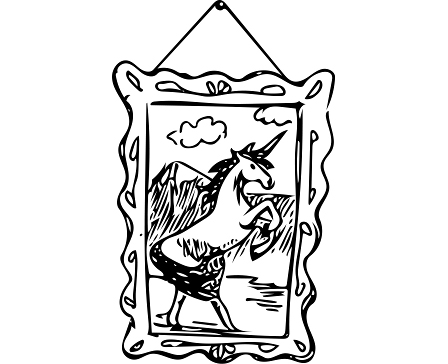
That’s why when I tell people I have a velvet unicorn picture hanging on a wall in my home, they look at me with concern. But when I tell them the wall is in my garage, they laugh, somehow relieved. Where it hangs changes its meaning, changes how one receives it.
Searching out and appreciating the not-so-immediately-available context is how we show that we understand – or desire to – what’s really going on. It’s an expression of our sincerity, our taking one another seriously, our Love.
So if Christ’s summary of this Book we’re trying to take seriously is “Love,” then we might need to work on applying the same dutiful contextualizing to the objects of this Love.
My father sat down with me and we thumbed through an old photo album. Grainy photos of grandparents, great aunts and uncles I never met. People dead for so long I didn’t even miss them anymore. But my dad started speaking to their context, and to his own.
And tears filled his eyes as he explained the life these photos could only hint about for those who lived outside their context.
His grandfather had committed suicide a few years before I was born. This man was one who made my father feel loved like almost no other. Made dad feel like a favorite. But when the old man’s wife, my great-grandmother, passed away, followed painfully soon by his daughter, my great aunt, the man lost his hope and his mind and took his own life in his bathtub.
Soon after that my dad met my mom, and both those teenagers were very quickly thrust into young and unplanned and unprepared parenthood.
And then dad graduated the police academy and began dealing with people as a State Patrolman, one who others are rarely glad to see. His job was rewarding, but took an immediate toll.
This job he did on swing shifts, never for years finding stability to his rhythm. He enforced the law with a mind bruised from his deceased grandfather, his interactions with the public, and perpetual lack of sleep.
My mother and father moved nearly a dozen times, with two young boys in tow, in just a handful of years. Dad was placed and re-placed as rookies often are. Mom was in many respects a single mother, charged with keeping a noisy house of toddler energy sane while dad was gone, and then keeping a noisy house silent when he was home trying to sleep between shifts.
Then Dad’s mother died. He showed me a picture of her holding me in a diaper. He’d lost his confidant. His advocate.
Then he lost his father four years later. His safety net for hard times now completely untied.
My mother had already lost her father as a teenager. Now she was losing a father again. And pieces of her husband.
Grief and pain descended on my house. There was laughter. I can remember a lot of laughing. But pain and tension undergirded it.
Then, after a few more years, mom and dad lost their marriage.
One house was two.
Dad turned the album’s creaky pages, tearfully recounting the chronology. And it occurred to me, like awaking from a coma:
His name isn’t dad.
Her name isn’t mom.
That’s just the title a mere two people on earth – my brother and I – call them.
He’s Jim. She’s Teresa.
There is an entire story, a seemingly infinite amount of context, outside of the framework I had ever seen. There was so much more to him and to her than I had gotten used to interacting with and judging based on it meeting with my preferences and expectations. How hard, how impossible at times, life had been for my parents. “Wait a minute,” I later remarked aloud, “they did a damn good job.” Now I was honoring them for who they were outside of my own narrow context. Just like I hope my kids do for me.
I never loved my parents more as an adult than the day I recognized that there was a story outside of the framework I was part of. And I was never as able to have the Compassion, understanding, acceptance and the respect like I had when it clicked that they weren’t unpaid extras in a movie about me.
Now I could see that they were real human beings. If anything, I was the new cast member in the movie about them. In a strange way, without allowing myself to condescend, this was when my parents became also my brother and sister, because now I could see enough context to suffer with them. Together.
And if they had context enough to enhance my value and respect for them to such a staggering degree, who else might not be soulless, non-union actors in the Steve show? Who else might have reasons for their beliefs, their actions, their feelings? Who else had backstories for their current performances?
The word respect is made of the words re and see. It has in it the effort to take another look because the thing is worth more than a first impression. Compassion and Love dictate that we respect human beings, over and over and over and over, because we’re coming to realize our great capacity to totally, embarrassingly misread someone without taking the time to observe the backstory. Yet all we ever wanted was for someone to know ours.
Today, you are 99% wrong about everyone you hold opinions about. That figure may be low. In our growing sense of Compassion, such as we would like leveled at ourselves, let us respect the human beings around us enough to see what lies beneath that which our made-up minds insist it already has pegged.
See. Then re see. Then re re seen. Again and again and again until you know their real name.
18
Speed Trap.
My wife and I debated recently about police and the role they play in enforcing the law. My wife was commonsensical about it. Yet we were debating. That’s probably enough information for you to determine which of the two of us was being reasonable.
I admitted to her my argument was likely fueled by some Officer Daddy issues for me. Still I spoke frustratedly about how the human ego, plus power, never works out for the people under that power. I argued cops are necessary and mostly good. But when they’re bad it’s so bad.
Kristi agreed that there are flaws in the system(s), perhaps severe flaws, but that the alternative scenario I was implying was far from realistic.
I spoke of my specific irritation that a traffic officer can decide to give you a ticket or not, based on his or her mood. I’d had officers tell me it was my lucky day, they liked me. I argued it was too much discretion. Either take away this fickle discretion or put chips in our car that record our speed and send us a monthly bill for overages. I didn’t fully believe this simple binary, but I needed something to bolster my position since she had commonsense on her side.
“But if the speed limit is 55,” she said, “and you are going 57, you are breaking the law. Plain and simple. You agreed to the terms when you got a license, and agreed again when you got on the road with the white signs that present to you the speed limit-” she emphasized that the word on the sign says limit– “so you should accept that you are breaking the law and there are consequences. If an officer decides instead of ticketing you to warn you, in the spirit of good will, then that is a gift. But the issue remains; you are the one breaking the law. Not the officer. It’s not perfect, but it works.”
I struck back with something that sounded really philosophical. “My basic point is that moral people don’t need laws and immoral people don’t obey them. It doesn’t work well enough.”
“But it works better than doing nothing,” Kristi insisted. “Being pulled over, the very threat of it, keeps selfish idiots from assigning to themselves their own speed limit. Think of the people who would be dead if not for the system applied, flawed as it is.”
The next day I thought about how, to a ridiculous degree, the issue is that I think I’m in many ways special. Exceptional. Often not subject to the same structures and guidelines as others. I’m a great driver. Not just in the typical Confidently-Above-Average American way. I’m saying I scored 100’S on both my driving test and memorized every second of the car chase from The French Connection.
But this wasn’t really about driving. It was about me, the proverbial man in the rearview mirror and what psychologists call the Self-Serving Bias: a penchant we have for favorably excusing ourselves from the average or the whole.
A friend of mine sent me an email that next day. He had no idea about the debate I’d had with my lower test score achieving spouse. Totally unsolicited but apparently prompted by the One who sided with my wife, my friend had copied and pasted some thoughts he’d written down during Lent a couple years back and sent it to me to see what I thought about it. One section said,
“…I had to start thinking about all the things I do that are not loving. All the things I do that get in the way of love. Like speeding. That just popped in my head as I drove. How does speeding affect my ability to love? Because I am more impatient with those around me when I speed. I do little things like rush yellow lights and tailgate those who are not in the same hurry….”
He then posited the negative side affects of being a slower, more responsible driver.
“I could start judging all those reckless drivers who are insisting on going over the speed limit. Or create an inconvenience of slowing someone down in a hurry…While I didn’t feel more loving, I started thinking about the others on the road…”
My desire to see myself as special, to be seen by others as exemplary, most of the time cuts me off from the “we” and makes me a disruptive problem for the whole. Speeding in traffic because I’m a better driver than you, or slowing down because I’m a more sane driver than you, both have a way of dislodging me from you, from the us, causing problems in the same way that one special cell who does its own thing is called cancer and harms the body. If I’m exempt, I probably demand more consideration than I give.
Our desire for specialness can misinterpret Paul’s words about self-control – especially the part where we come to realize no one controls me but me. The ego can take it as a self-appointed exemption. No one controls me, and so I answer to no one. Community Immunity. Tony Stark, but without any of the genius or cash.
I’m not going to recycle. Others can but I don’t have time for that.
I’m not going to put money in the honor system cup. Enough others already did.
I’m not going to sit all the way through this speech. I get antsy so I’ll get up an refill my drink and go pee.
I believe in forgiveness but I’m not going to forgive her. That girl was rude.
“It is well to remember that the entire universe, with one trifling exception, is composed of others.”
I taught Kenyan Church leaders in a dung hut for 4 hours. We talked about unity and creative ways to unite those who have gotten too good at living in response to what makes them different. Then we took communion together, all the different denominations and backgrounds, under one roof, at one table. It was beautiful.
Simultaneously there was a medical team treating everything from headaches to the deleterious affects of AIDS. Women and children had waited in line since before dawn to be seen by the only doctor they’d encountered in decades.
One pastor from my session shook my hand as we closed, walked out into the midday sun, and cut into the front of a 100-yard long line.
“Brother?” I said as I walked up to him. “What are you doing? Shouldn’t you and I take the back of the line since we came last, and especially since we are trying to put the Love of others on display for this divided community?” I was probably out of line, having little context in that moment. But, hey, I’m a great driver. “Aren’t you showing others that somehow you are to be favored for your position in the church?”
“Ah, yes. But you see,” he explained in his delightful accent, thumbing over to people behind him who held motionless infants, whose bodies were stuck in yearlong stoops, who were holding dirty cloths to unhealed lesions. “…I am not sick. I am ill.” He went on to explain that he had a throb he wanted to check out.
I am special. And my needs are the priority, why else would my feelings be so strong about them? Others are subject to processes and protocol. I am exempt.
The ego wants to stand out. Its slogans are “Have you noticed yet how much better/more deserved/smarter/more in pain I am than you? My circumstances excuse me.”
Convincing the ego to be subdued by what’s better for the many is something that can only be done by way of moment-to-moment rehearsal of the Golden Rule. It’s coming to believe Compassion for the other is of higher value than the priority of self. I want to be special so intensely, so earnestly. Therefore I give this energy to making something special out of you.
It’s a steep mountain for us to climb. Maybe more so for us in the West, as the subduction of the ego to the good of all others is seeming more and more synonymous with “unAmerican.” It’s in our society’s genes for us each to find a way to be a special individual, but more special than the other special individuals who comprise these United States.
I want to be the thunderstorm, but please God never a raindrop.
Perhaps this disposition is why there are leadership conferences held every weekend in every city but no one’s ever been to a followership conference. I suppose military basic training is followership training, but then those kids go and “defend America” and protect our freedom to each be the most special.
There’s no scenario where the ego is eradicated. The sense of self, and its protection, if I haven’t made this clear, are part of the human experience. To some degree a necessary one. If Tony Stark eradicated his ego completely we’d all be speaking Chitaurian right now. It’s once again about proper calibration. Turning the dial to at least 51% others and the analyzing all the ways we try to subvert this setting in favor of the self.
“You were called to freedom, brothers and sisters. Just don’t turn your freedom into an opportunity for the ego. Instead, through love, serve one another. Because the entire Law of God is fulfilled in this sentence: ‘You shall love your neighbor as yourself.’”
17
If ‘Stop It’ Worked, Jesus Coulda Stayed Home
Christ sounds like he’s got a megaphone to his lips outside a concert in the opener to Mark’s gospel. He was talking repentance, that thing where people change and where maybe what I said in the last chapter is wrong. You can almost feel him glaring at the guy with a nose ring.
“The time is complete, and the kingdom of God is at hand; repent and believe the good news.”
The word “repent” has come to look best in picket sign scrawl. Few words have as much baggage. Typically it’s being shouted by one sinner at another, because the worst sins are always other people’s.
But Jesus must be proclaiming repentance for reasons not rooted in all this.
The word, at least originally, has more to it than behavior modification. It literally means in the Greek it’s translated from, Change your Thinking, or as we might say today, Wake Up. It’s not a demand that others stop doing something. It’s an alarm clock.
There is, according to Christ, a Kingdom in our midst that’s over and under and permeating whatever temporal Empire or Nation or Kingdom were standing in. Right here, at hand. It’s not confined to geography or a yet-to-be-experienced afterlife. It’s the state of things being as they are supposed to be. Now. This domain, by Christ’s account, is immediately available. Right there in a cubical, in a ditch where your car’s radiator steams, in the penthouse pool cabana and at the dinner table of our enemies.
Boundless Love.
Infinite resource.
Like treasure buried right in our yard. Thinking differently is the shovel that unearths it. Being good boys and girls may or may not ever find it. In this awakened thinking we will come to believe some things, to disbelieve some things, to adopt some things and to let loads and loads of crap go.
An invitation to come awake is very different than a behavioral ultimatum. The difference between the nun with a ruler and the Christ handing me coffee at my bedside, asking if I’m ready, after all these years, to get out of my bed and live. When we realize demands aren’t held over us, then we have a better chance of resisting the urge to hold it over others. It turns out repenting is the lifelong process of learning to see. The gift of sight by a Father who doesn’t slap hands but illuminates sleepy eyes. We’re standing in it. It’s at hand. Anywhere, anytime. Repent and see you’re waist deep in it. “The Kingdom of God isn’t something you go see,” Jesus once said. “Nor will anyone say, ‘It’s here!’ or ‘It’s there!’ Behold, the Kingdom of God is within you.” (Luke 17:21)
We spend too much of our lives believing our timid minds. And we use those same timid minds to attempt “repenting” into something that God – whose really been reengineered into a higher-level Santa if we list out the traits- will observe favorably. Our faith is the concerted effort to get him to remove us from the naughty list. This is the cheapest, most played religion. Repent of this repentance. Santa’s for kids.
A god protesting us through angry sign holders in reaction to our sin isn’t worth much more than our avoidance. But a God calling us to wake up so we don’t get things twisted up in the first place; that’s a God who wants to set us up for a win. A God that isn’t trying to control our behaviors, but one teaching us control of our own minds. To be humans.
“History has revealed too many people who have tried to be spiritual before they have learned how to be human! It is a major problem. Maybe this is why Jesus came to model humanity for us—much more than divinity. . . Get the ordinary human thing down, and you will have all the spirituality that you can handle.”
I shut my car off in the driveway, and I pause before getting out to go into the house. Why?
Because first I must repent. I must check and perhaps change my thinking. The Kingdom is at hand. Will I see it, or go in believing my unsophisticated, unadjusted selfishness?
I’m heading into a meeting. First, I should go repent in the restroom. There, in a stall designed to shield others’ eyes as I dispose of that which has no value to me, I ask myself if I’m feeling gypped by anyone or anything, and therefore generally owed?
In a few moments I am going to ask my children to explain why, other than the fact that they are children, they haven’t done what they’ve been told to do. I must repent first: Have unmet expectations, condescension, humiliation happened to me today, motivating me to demand the members of my household give me what I’ve been robbed of throughout the day?
I’m having a conversation and I feel the urge to start talking. Perhaps the urge to begin out-storytelling. I repent. Can’t I just listen to others’ good or terrible day and leave myself out of it unless invited?
Before I go into school, or work, or into a conversation or before I think about commenting online, I must remember to repent. This way I don’t unthinkingly believe people must approve of me for me to have value. That people must want sex with me for me to have a sense of worth. That my witty criticisms of government, an opposing team, the board of directors or the manufacturers of a product, will somehow translate into my being seen as intelligent, boosting my social rank. I must repent my mind over and over or I’ll default to a kingdom of Me. The Kingdom whose economy is compassion and not morality, is right there, roaring like a spring under my feet. I just have to remember the importance of dowsing for it. I am gifted the control of my mind, if only I’ll care enough to remember I have it. Good God in heaven this is all so much more than a religion that declares “stop it.” If anything, it’s about finally beginning. Sanely. Lovingly.